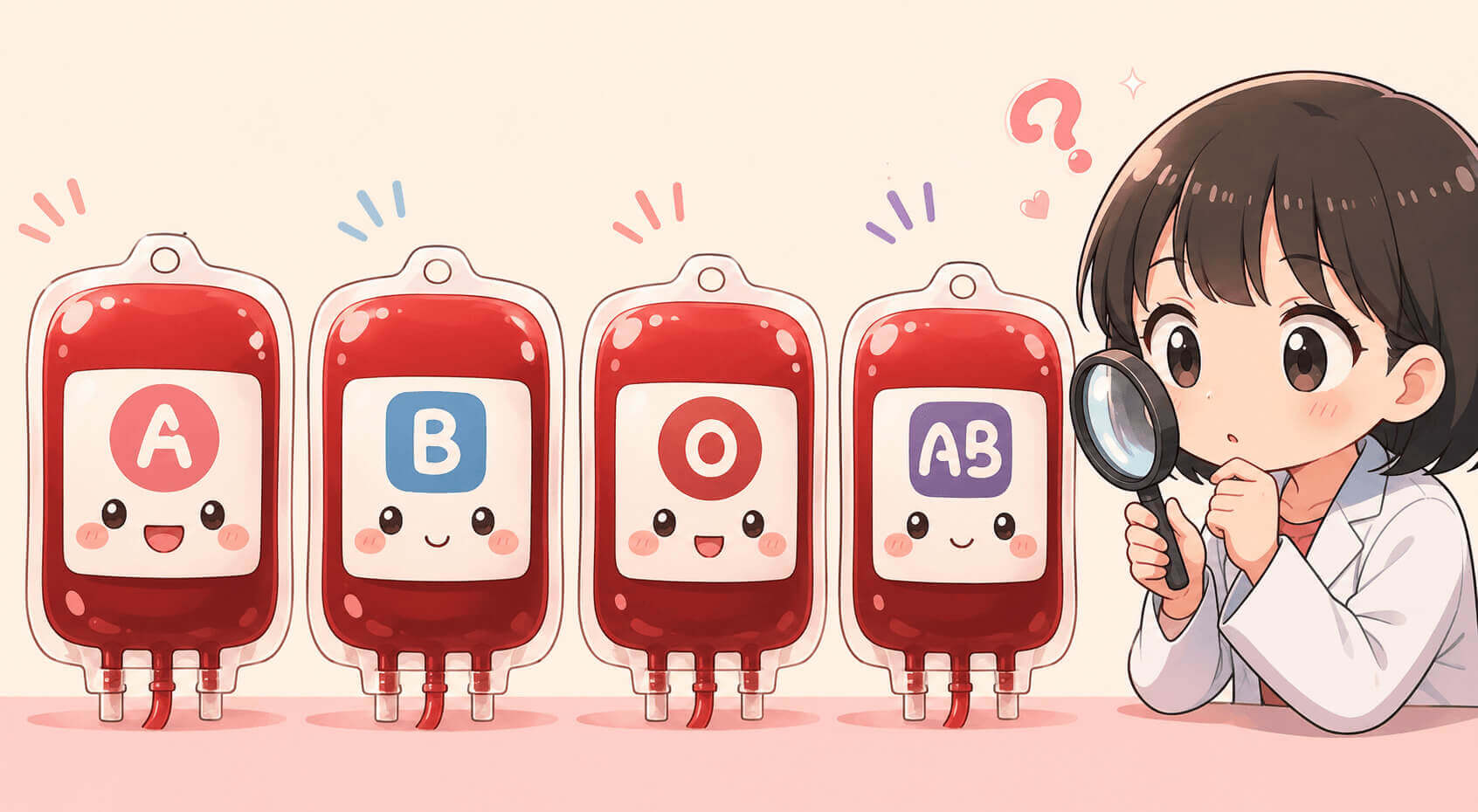
It was a beautiful day in Fukuoka prefecture when I first encountered the fascinating world of Japanese blood type personality profiling. A colleague asked me out of nowhere, “What’s your blood type?
“Type B!” I replied proudly.
Instantly, the smile on their face froze. A flicker of awkwardness crossed their eyes, and they quickly changed the subject. I stood there completely baffled, feeling a little hurt. Did I say something wrong? Is there something wrong with the blood pumping through my veins?
As it turned out, I had just run face-first into a unique and rather amusing quirk of Japanese culture: Ketsueki-gata (血液型)—the nation’s obsession with blood type profiling.
The Unfair Rep of Type B
In Japan, blood types are taken just as seriously as zodiac signs or MBTI tests are in the West. But on the Japanese “personality map,” Type B unfortunately carries a bit of a heavy cross.
If you tell someone in Japan you’re Type B, they will likely associate you with a few notorious labels:
-
Jikomuchū (自己中心): Self-centered, always putting yourself first.
-
“My Pace” (マイペース): Living entirely on your own wavelength without a care for the collective. In a society that deeply values harmony and conformity, being “too independent” is often seen as a major flaw.
-
Rakutenka (楽天家): So optimistic that you come off as carefree or careless about your work.
This bias runs so deep that Japan even coined the term “Bura-hara” (Blood Harassment) to describe situations where people face discrimination in dating, or worse, during job interviews—just because they are Type B or AB.
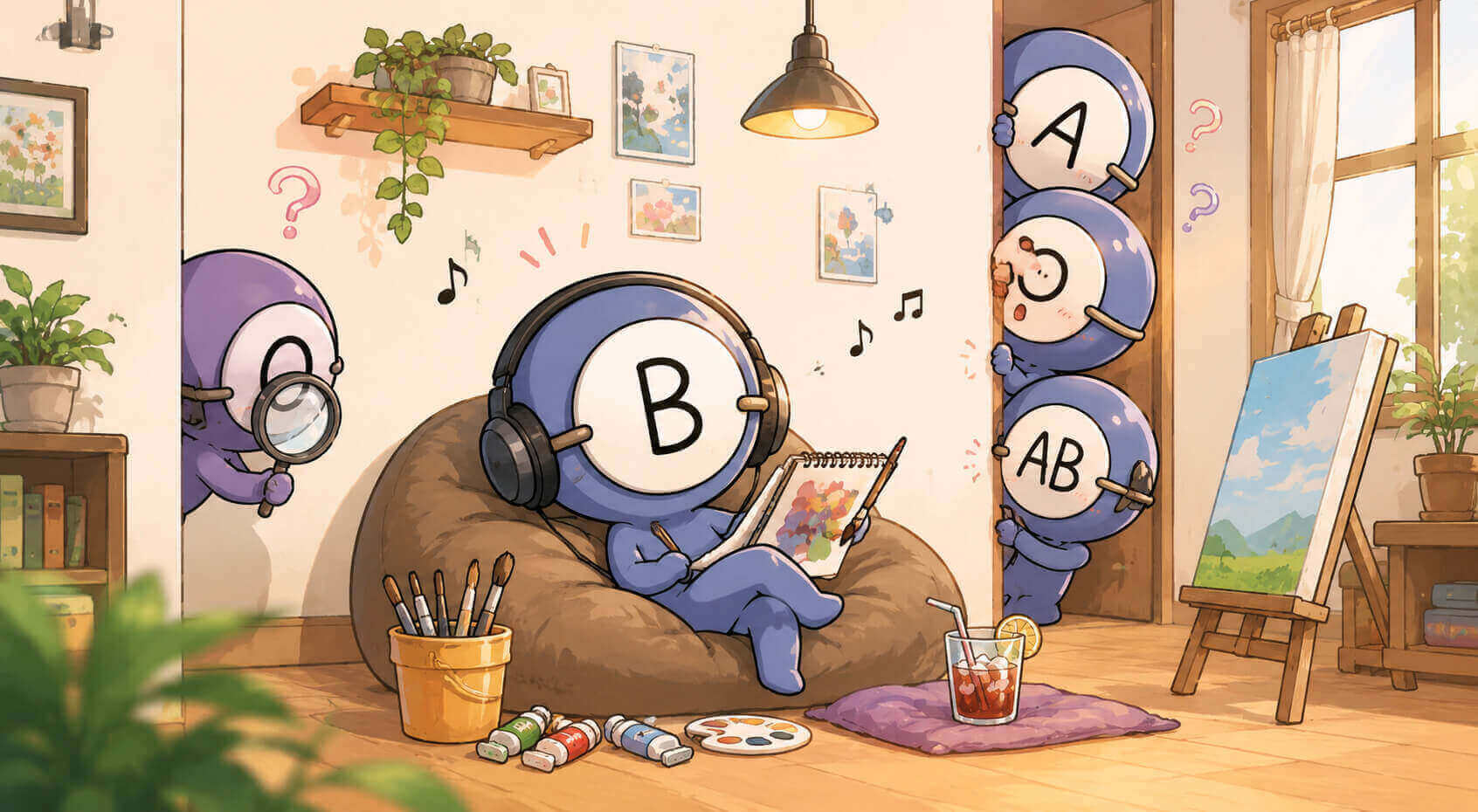
To be completely honest, when I first read these descriptions, I gasped. They actually sounded exactly like me. I love freedom, I like doing things my own way, and I get bored easily. But is that really because of my blood?
The Science: Blood Sustains the Body, Not the Personality
To find answers, I dug into medical and psychological research. The verdict from the scientific community is unanimous and absolute: there is zero link between your blood type and who you are as a person.
Biologically speaking, your blood type (A, B, O, or AB) is determined solely by antigens on the surface of your red blood cells, which help your immune system protect your body. It is completely isolated from the neurotransmitters in your brain—the actual control center for your emotions and behavior. Large-scale studies involving tens of thousands of people in both Japan and the US have proven that the personality difference between blood types is exactly zero.
So why do I—and perhaps you—feel like these descriptions are so spot-on? Psychology points to two phenomena:
First is the Barnum Effect. Humans naturally tend to believe vague, universal descriptions apply uniquely to them. Who hasn’t felt selfish, wanted to move at their own pace, or gotten bored at some point? When told that Type B people are like this, our brains selectively dig up matching memories to convince us it’s true.

Second is the Self-Fulfilling Prophecy. If a child grows up in a society where everyone says, “Oh, you’re Type B, so you must be a wild, independent spirit,” they unconsciously internalize that label and begin acting it out over time.
Behind the Curtain: How a Pseudo-Science Became Pop Culture
Surprisingly, blood type theory has a dark history. In the early 20th century, following the discovery of the ABO blood group system, some Western scholars twisted the science to justify racial discrimination. In 1927, a Japanese academic named Takeji Furukawa published a paper suggesting blood types determined temperament to explain social uprisings, but it was quickly dismissed by the scientific community due to a lack of empirical data.
The trend truly exploded in the 1970s when Masahiko Nomi—a journalist, not a scientist—published a series of books on the topic. Capturing the public’s curiosity, his books sold millions of copies. They transformed a debunked pseudo-science into a massive pop-culture phenomenon, embedding it into TV shows, magazines, and everyday casual conversations in Japan.
Wear Your Type B Label with Pride
At the end of the day, when a Japanese friend asks for your blood type, it’s usually just an icebreaker—a way to ease the tension, much like asking someone about their hometown or age. Cultured, mature adults will always judge you based on your character and competence, not your cells.
So, the next time someone asks me, I’ll just smile and say: “I’m Type B. I definitely march to my own beat, but that’s exactly why I’m focused and creative!”
Don’t let society’s labels put you in a box. Your personality is shaped by your life experiences, choices, and personal growth—not by the sugar molecules sitting on your red blood cells.