Have you ever wondered why earth tilts for seasons?
Why does one year bring four distinct seasons—Spring, Summer, Autumn, and Winter—while Southern Vietnam enjoys only two simple rhythms: rain and sunshine?
Have you ever stepped outside on a scorching summer afternoon or during a sudden tropical downpour and wondered: “We all share the exact same planet, so why do some places experience four full seasons, while others stay warm all year round with just wet and dry months?”
The secret lies in a couple of fascinating natural wonders right beneath our feet!
The Surprise Truth: Hot Summers Aren’t About Being Closer to the Sun!
Many of us—myself included, back in the day—grew up believing that summer gets hot because Earth physically moves closer to the Sun. But nature actually has a wonderful twist for us! In the Northern Hemisphere, the exact moment Earth is farthest from the Sun happens right in July—the very peak of summer heat.
The real storyteller behind the four seasons comes down to just two humble facts:
-
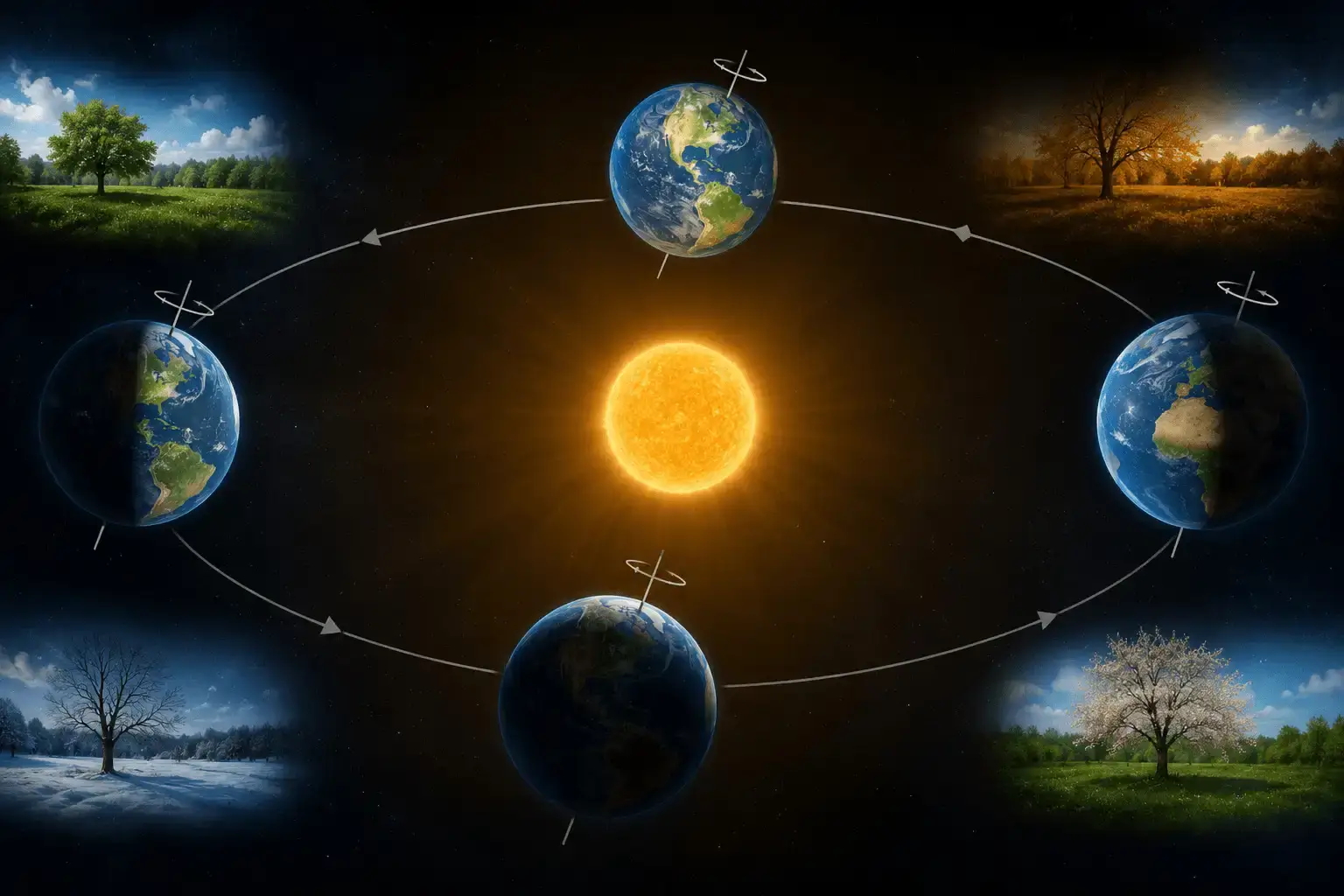
Earth’s 23.5° Tilt: Our planet doesn’t sit upright. Instead, it spins along an axis tilted at roughly 23.5° (as explained by NASA Space Place).
-
The Year-Long Journey: It takes Earth about 365 days to complete one full orbit around the Sun.
Because that axis stays pointing in the exact same direction in space throughout the entire journey:
-
When the top half (Northern Hemisphere) leans toward the Sun: It receives direct, concentrated sunlight and experiences days longer than nights. This is how warm, golden Summers are born.
-
When the top half leans away: Sunbeams strike at a slanting angle, spreading energy thin. Days grow shorter than nights, welcoming the crisp chill of Winter.
-
The passing-by moments (March & September): Both hemispheres catch equal amounts of sunlight, giving us gentle Springs and breezy Autumns.
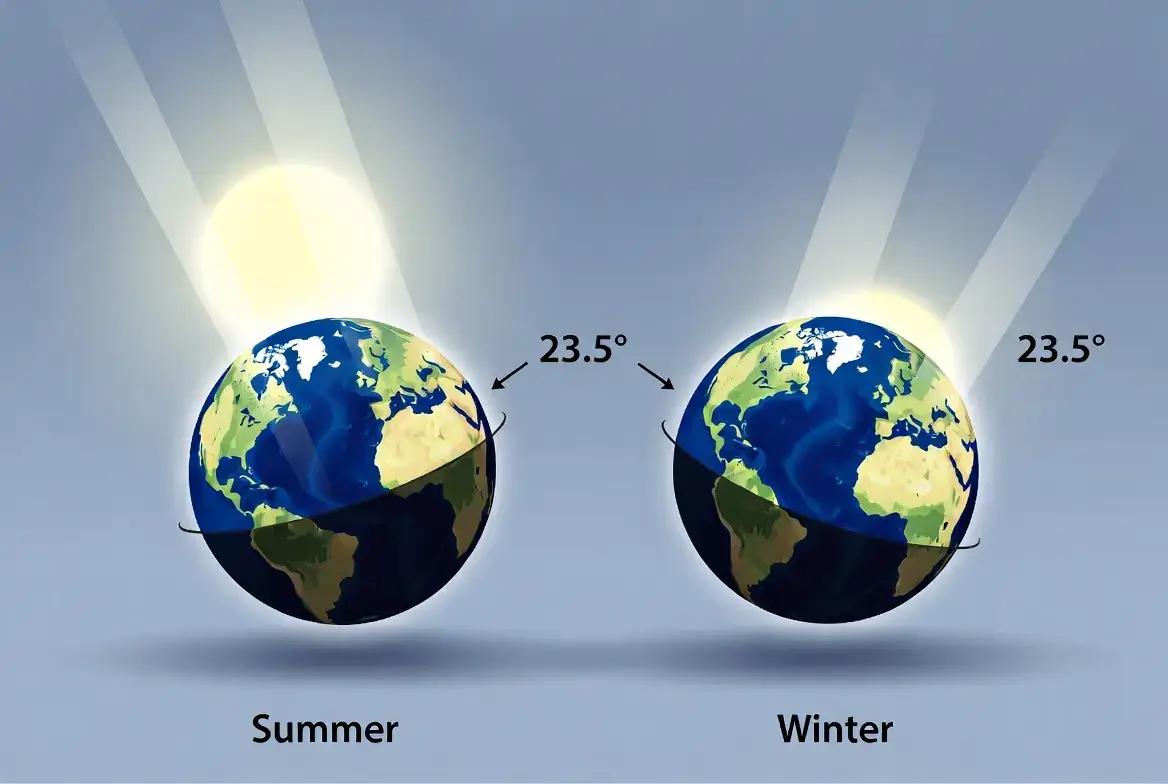
Direct sunlight in summer builds up far more heat than the angled, scattered rays of winter. And so, the two halves of our planet take turns basking in the light, painting a gentle, repeating rhythm of four seasons.
Meanwhile in Southern Vietnam: Why Only Two Seasons?
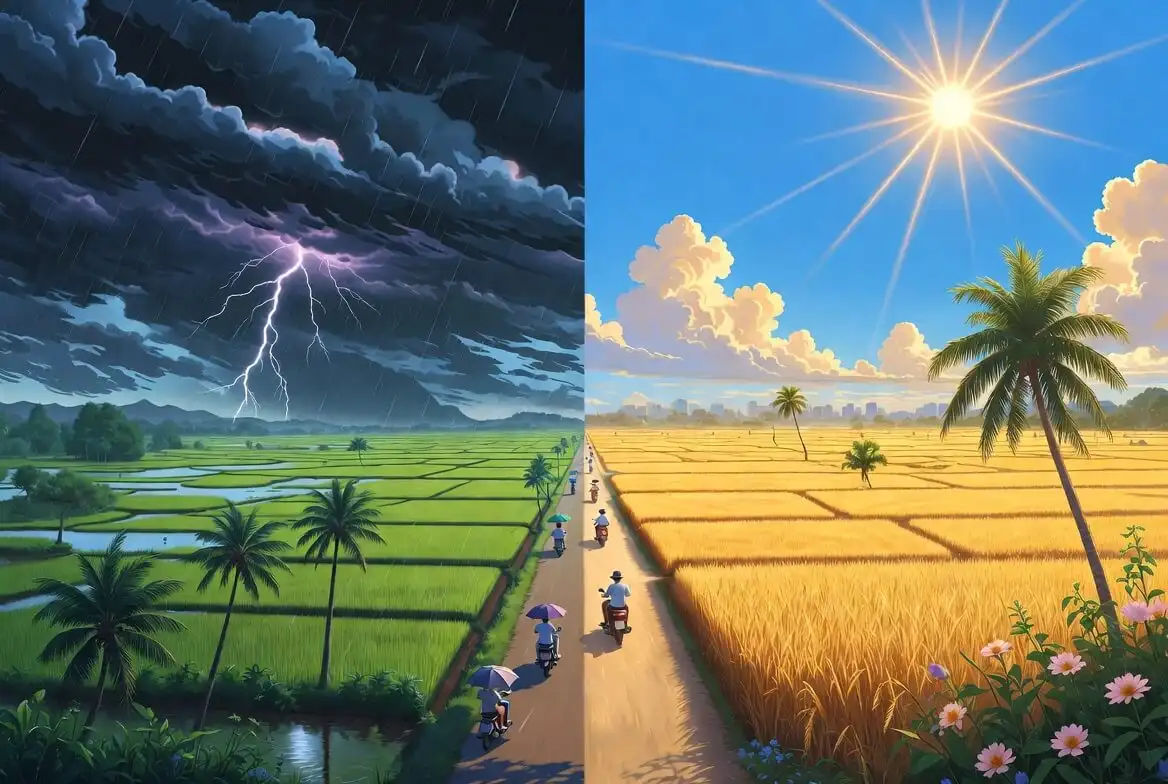
While Northern Vietnam gets to enjoy the full spectrum of Spring, Summer, Autumn, and Winter, folks down south live by a familiar rhythm: six months of sunshine, six months of rain. This local magic comes down to two simple geographical gifts:
-
Living Right Near the Equator
Southern Vietnam sits at a low latitude, right near the Earth’s equator. Here, the Sun pours abundant warmth down all year long. Because there’s never a time when heat drops drastically, the South never experiences a true, biting winter.
-
The Rhythm of Two Great Winds
Instead of four seasons, life here moves with the breath of two major monsoons:
-
The Rainy Season (May to November): The Southwest monsoon blows in from vast oceans, carrying vast moisture. When it meets the warm land, it turns into clouds and pours down torrential, refreshing afternoon showers.
-
The Dry / Sunny Season (December to April): The Northeast monsoon brings dry air down from the mainland. Clouds thin out, giving way to endless days of crisp, golden sunshine.
-
A Final Thought
Whether it’s the classic romance of four seasons or the cozy, poetic cycle of rain and shine, weather is Earth’s way of sharing its gifts—born from a slight tilt in space and sweeping ocean breezes. Knowing this makes every sudden afternoon shower and morning sunbeam feel just a little more magical, doesn’t it?