When looking at the 110v vs 220v debate, have you ever stood in front of a secondhand Japanese appliance—maybe a high-end induction rice cooker that makes perfect rice, or a rock-solid handheld drill—and sighed because you had to buy a massive voltage transformer just to use it at home? In that moment, a question probably popped into your head: “Why do wealthy nations like the US and Japan stick to 110V, while places like Europe and Vietnam use a much leaner 220V system? Which one is actually stronger, safer, and truly modern?”
Today, let’s sit down, grab a cup of tea, and take a casual, practical look at the tale of 110V versus 220V.
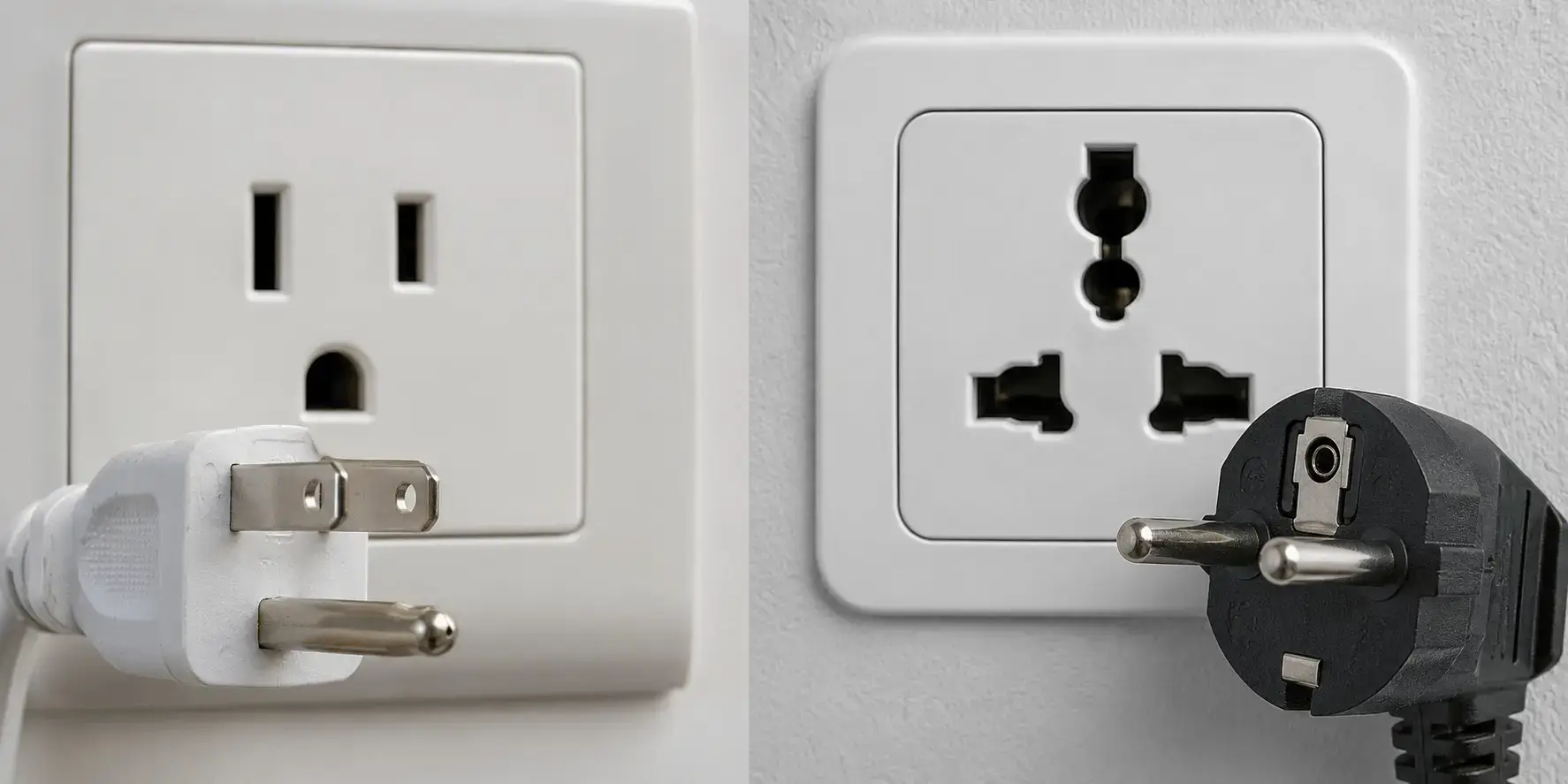
“Strong vs. Weak” Through the Eyes of a Electrician
Many of us naturally think: 220 is double 110, so a 220V current must be “stronger” and make appliances run more powerfully, right?
But if you ask a field engineer, they’ll just smile and shake their head. In the electrical world, the actual power a device needs to run—called Power (P)—doesn’t just depend on Voltage (U, measured in Volts). It’s multiplied by Current (I, measured in Amperes). The golden rule every tech person knows by heart is:
P = U x I
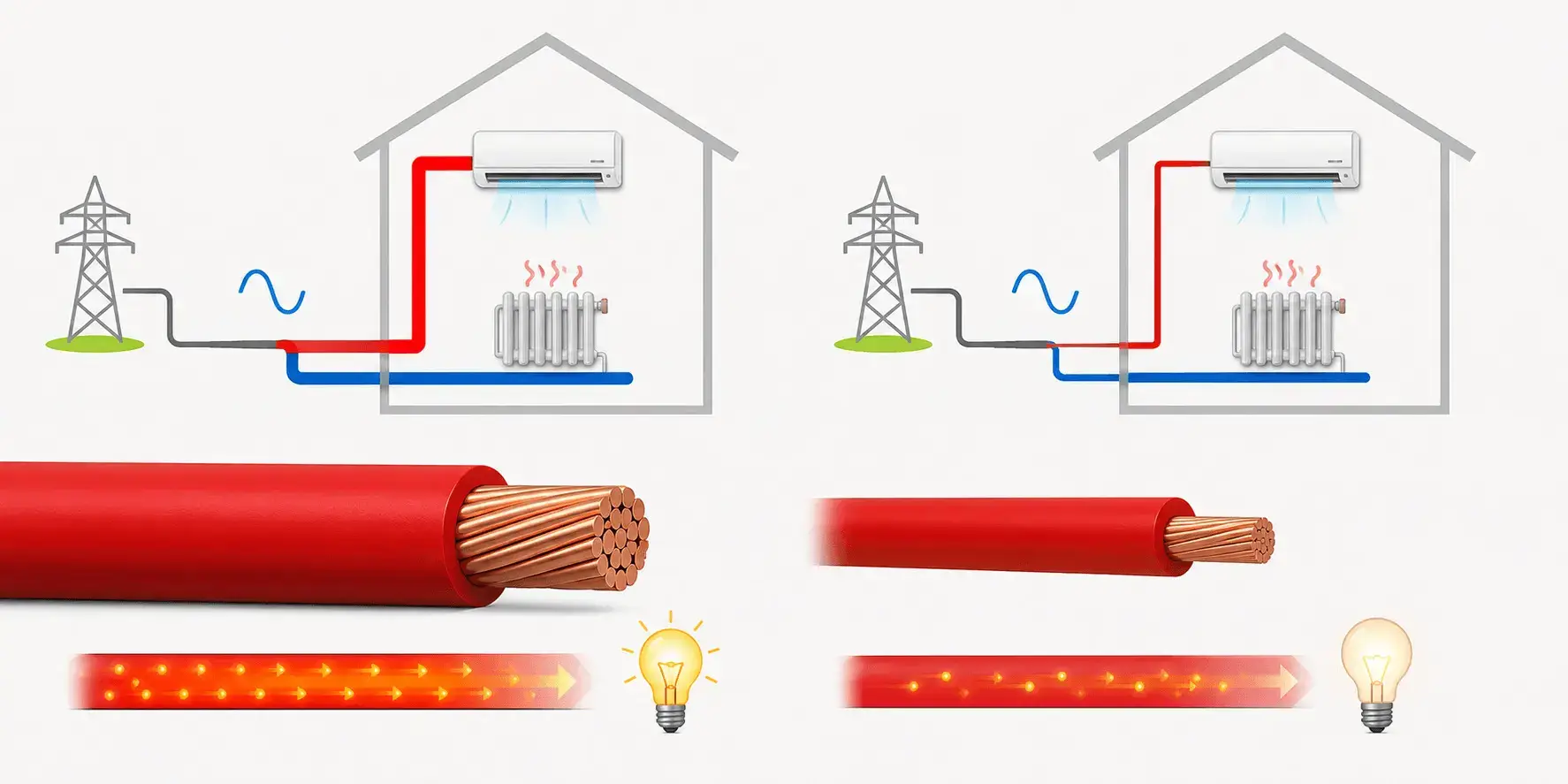
Let’s use an easy example. Imagine you have a household drill rated at 1100W.
-
If this drill is built for the US market (a 110V grid), the current flowing through the wire has to be 10A.
-
If that exact same 1100W drill is built for the Vietnamese or European market (a 220V grid), the current only needs to be 5A.
The end result? Both drills pierce through a brick wall with the exact same speed and power. So, saying 220V is “stronger” isn’t quite accurate. The real difference is that 220V acts like a high-pressure water pipe. It pushes energy further with less drop-off along the line, without forcing the wires to “muscle through” a massive current. That is why heavy-duty home appliances like air conditioners, induction cooktops, or water pumps prefer 220V—it keeps everything running smoothly and cool.
A Matter of Life and Death: Which Voltage is Safer?
When it comes to human safety, let’s be blunt: whether it’s 110V or 220V, carelessness can lead to tragic accidents. However, if you weigh them under normal contact conditions, 110V clearly offers a better safety shield.
Why? The human body acts like a living resistor. When your skin is dry, its resistance is quite high. With a lower voltage like 110V, the electrical pressure isn’t strong enough to pierce the skin’s natural defense, making it harder for the current to reach the danger threshold for the heart (around 10mA to 30mA).
On the flip side, 220V packing double the pressure easily breaks through skin resistance. A 220V shock usually causes intense muscle contraction, which can cause a victim to “freeze” or be unable to let go of the power source.
Here is a rule written in scars: just because 110V is safer doesn’t mean you can be careless. If you are standing on a damp floor or your hands are wet, your body’s resistance drops to almost zero. In that state, even 110V is more than enough to be fatal. Safety, at the end of the day, comes down to the user’s awareness and caution.
But the safety story doesn’t stop at shocks. When it comes to fire hazards in house wiring, 110V reveals an inherent weakness. Because the current (I) in a 110V system is always twice as high to achieve the same power, the wires inside the walls must be thick and heavy-duty. If someone uses cheap, thin wiring for a 110V system, the wires will quickly overheat, melt, and trigger a short circuit fire. On this front, 220V operates with a smaller current, running cooler and being much friendlier to the home wiring infrastructure.
A Historical Battle: Which One is Newer Tech?
A very common misconception is that developed nations like the US, Japan, or Taiwan use 110V because it is a newer, superior technology. The truth might surprise you: both systems are “centenarians.” They were born in the same era, and neither is newer than the other. It is simply the result of historical choices and path dependency.
In the late 19th century, the great Thomas Edison invented the first commercial incandescent light bulb. Through trial and error, he found that the carbon filaments of the time lasted longest and performed best at 110V (which was DC back then). By the time Nikola Tesla arrived and proved that Alternating Current (AC) was superior, the US had already built a massive infrastructure around that 110V figure. (You can read more about this intense showdown in the US Department of Energy’s article on the War of the Currents between Edison and Tesla). Decades later, that system became too deeply rooted to change. Japan later adopted a similar range (100V), primarily citing safety reasons.
Fast forward to the 1950s. As World War II ended, Europe entered a massive rebuilding phase, and household electricity demand skyrocketed. European engineers realized something: sticking to 110V meant spending a fortune on copper for thick wires, and too much energy was being lost during transmission. They made a bold move: upgrading the entire grid to 220V. Countries that developed their grids later, including Vietnam, quickly adopted this 220V standard to minimize initial infrastructure costs.
Why Don’t the US and Japan Switch to 220V?
By now, you might wonder: if 220V saves money, transmits better, and uses less copper, why don’t the US or Japan just launch a revolution and swap everything over?
The answer boils down to one word: Cost.
Imagine if the US government ordered a switch to 220V tomorrow. Millions of substations across the country would have to be torn down and rebuilt. Hundreds of millions of homes would need their walls cut open to replace every wire, circuit breaker, and outlet to handle the new voltage. And worst of all: billions of TVs, refrigerators, microwaves, and washing machines sitting in people’s homes would instantly turn into junk the moment they were plugged in. The cost to compensate and rebuild from scratch is estimated in the trillions of dollars—a sum large enough to cripple any economy.
Instead of taking that painful route, they chose a brilliant engineering workaround called the Split-phase system.
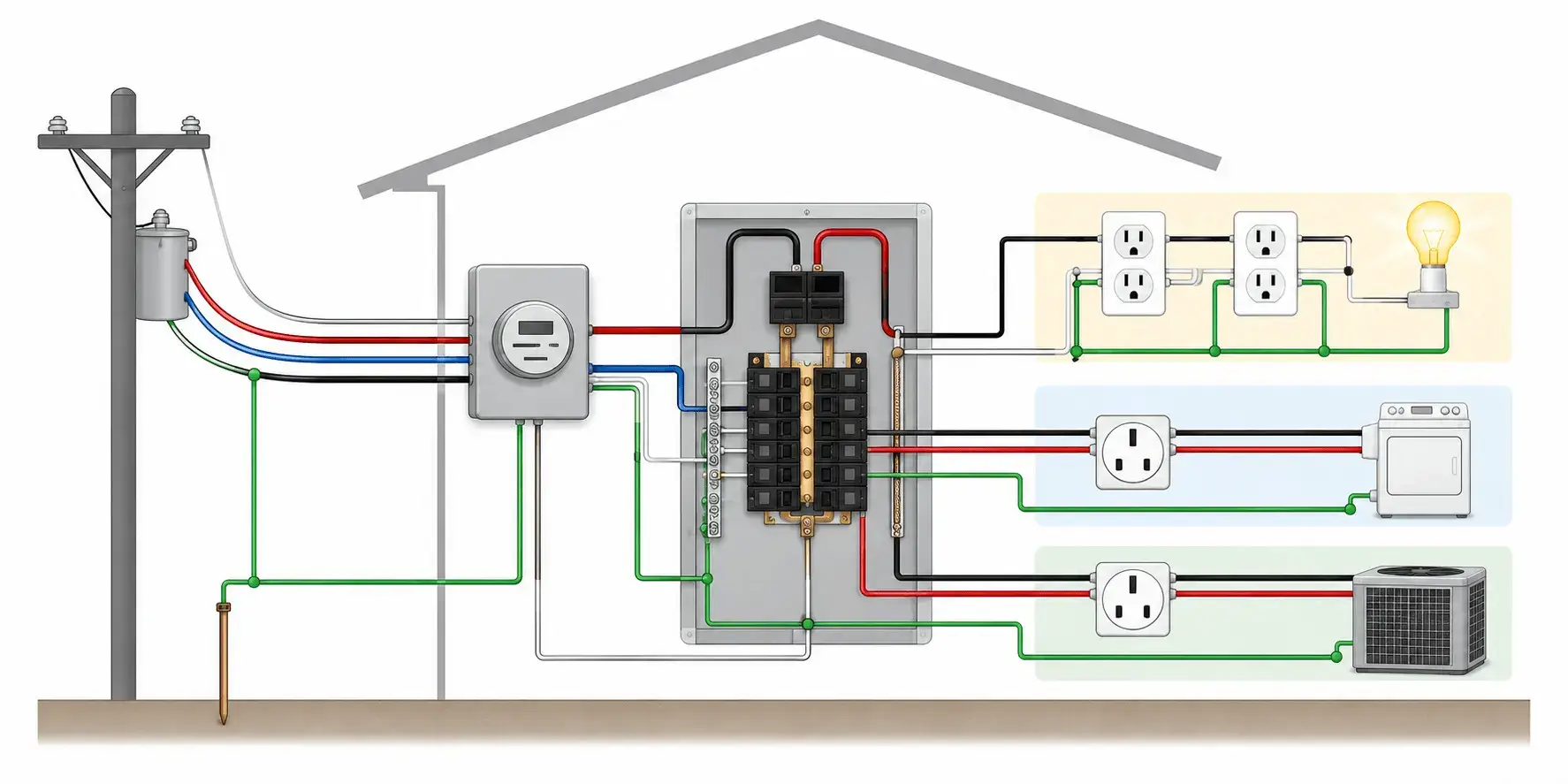
The power line pulled from the utility pole into a house is actually a 240V source, but it is split down the middle into two separate 120V legs.
-
For light duties like charging a phone, turning on a light bulb, or watching TV: They use a 120V leg so that if a user accidentally touches it, it isn’t as dangerous.
-
For heavy duties like running an industrial dryer, central air conditioning, or an electric range: The system connects across both hot wires to draw the full 240V.
This way, they keep the everyday safety of low-voltage outlets while having the muscle of 240V for heavy appliances, without spending a single dime to tear down old infrastructure.
Furthermore, building codes in the US and Japan are incredibly strict. Their wires are always thick, paired with ultra-sensitive Ground Fault Circuit Interrupters (GFCI) and Arc Fault Circuit Interrupters (AFCI). As a result, the fire hazards tied to high 110V currents are effectively neutralized right from the start.
The Appliances: Which Voltage Extends Lifespan?
Returning to the appliances in your home: does 220V make things break faster than 110V? The answer is no, provided the device was engineered for that specific voltage. A domestic Japanese rice cooker running on a proper 100V/110V supply easily lasts thirty to forty years, and a premium European washing machine built for 220V enjoys a similarly impressive lifespan.
However, each voltage grants appliances its own unique “perk” during anomalies:
-
220V keeps things running cooler: Thanks to the lower current, joints and internal motor coils generate less heat during operation, extending the life of mechanical parts and insulation. It also prevents the motor from “straining” during minor grid brownouts.
-
110V helps circuit boards survive surges: If the grid acts up and the voltage suddenly spikes by 50V, the internal components of a 110V device (now facing 160V) still stand a decent chance of survival. Meanwhile, in a 220V device, if the voltage surges to 270V, most sensitive capacitors and microprocessors will go up in smoke instantly. Additionally, the electrical arcing when you plug in a 110V device is smaller, meaning less wear and tear on the plug prongs and outlets.
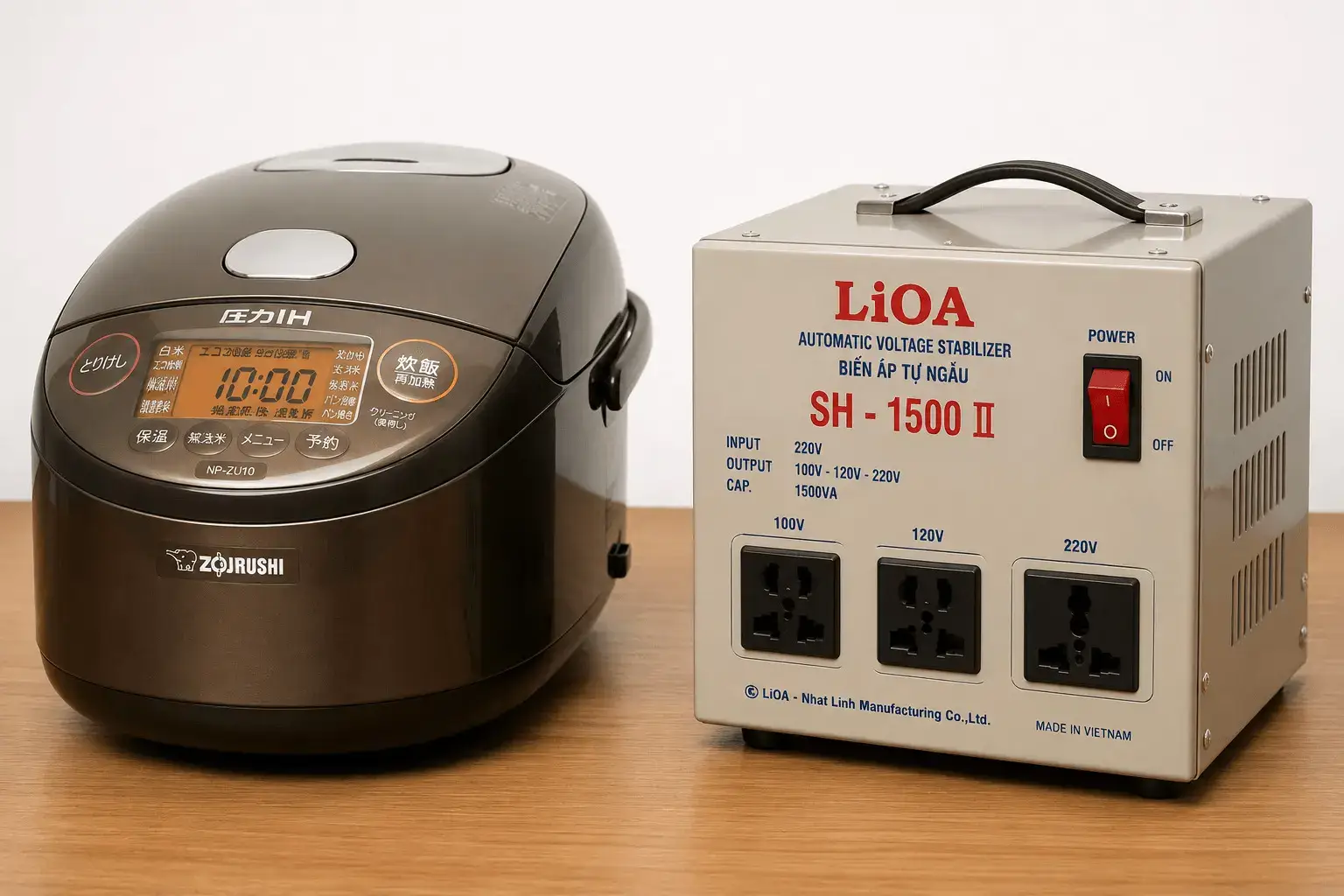
Final Thoughts
After wandering through history and engineering, it’s clear that the electrical world has no absolute winner. 110V or 220V are ultimately just engineering solutions tailored to the historical context and economic math of each nation.
220V gives us convenience, savings, and an efficient, powerful transmission system. 110V brings peace of mind regarding human shocks, paired with a clever, resilient hybrid solution. The most important thing isn’t how many Volts are running through your walls, but whether you understand your system, choose the right equipment, and always respect basic electrical safety.
Hopefully, today’s story gives you a fun, practical perspective the next time you look at the outlets in your home!
See also: The surprising truth about “who invented” electricity and the water flow metaphor to fully grasp how electricity flows as marvelously as currents in nature.
I never really thought about the differences between 110V and 220V before. It’s interesting how much that can affect wedding planning, though.
That’s a very fair point! I guess if someone is organizing an outdoor wedding with high-power sound systems, imported lighting, or setting up Japanese/US appliances for a new home, voltage differences can definitely cause unexpected headaches. Thanks for sharing that perspective!